ARRIVALS
Stowaways on tree ferns
Buglife says three New Zealand species became naturalised after plants, including tree ferns, were shipped to nurseries in south-west England. The first was found in a Paignton garden in 1909.
Identify one doodlestick
A HIDDEN BRITISH INSECT
Some Cornish hedges hide a New Zealand secret.
Identify one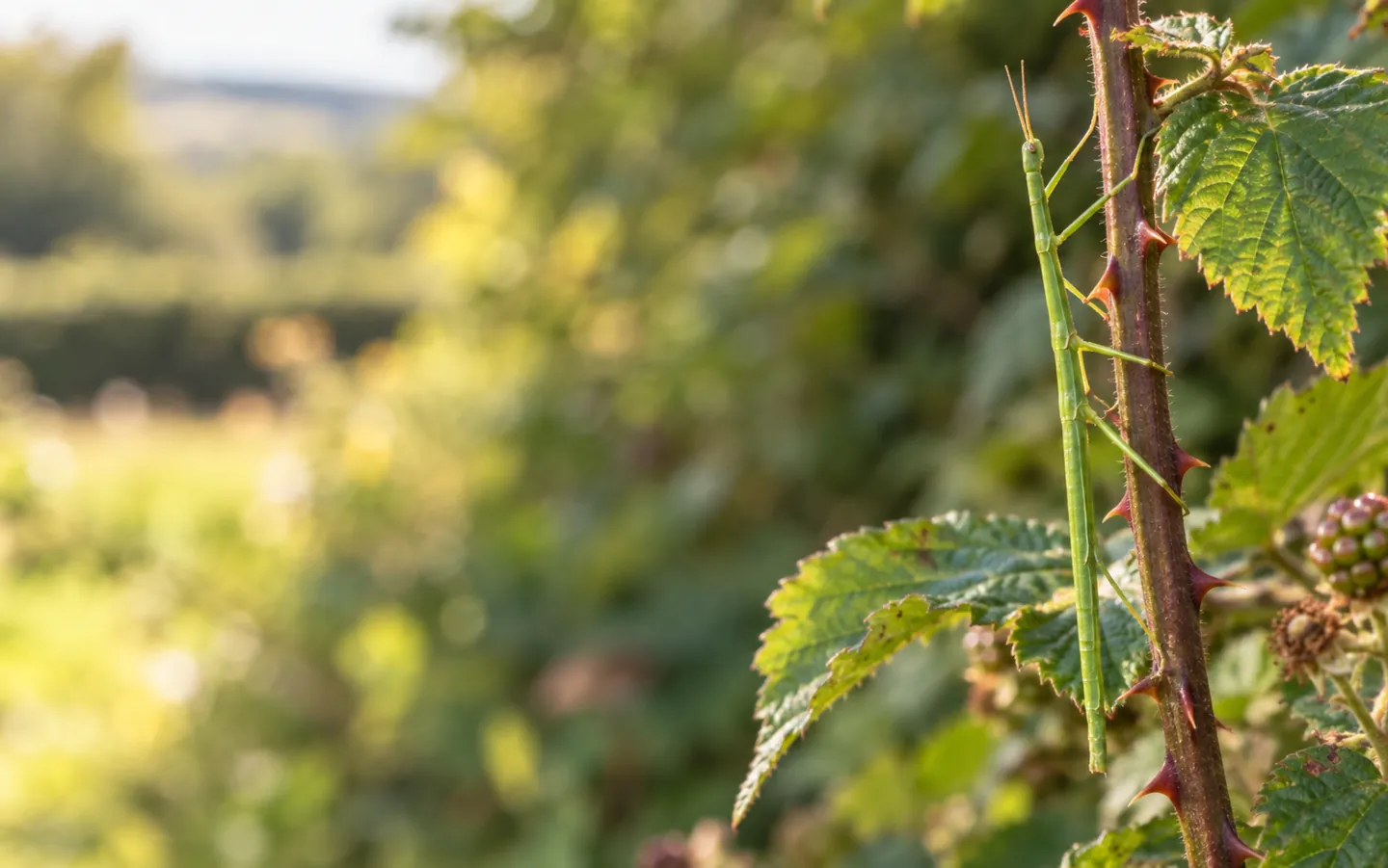
SINCE 1909first UK record, Paignton
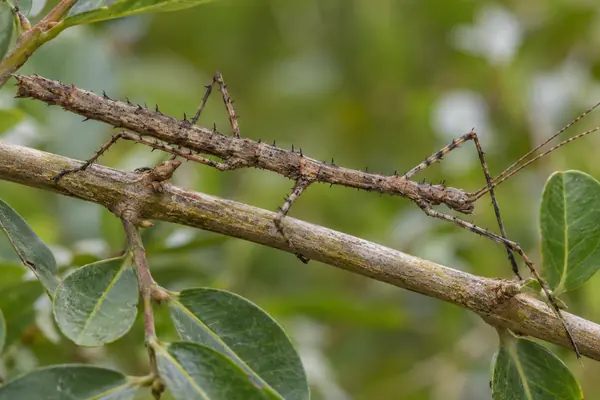
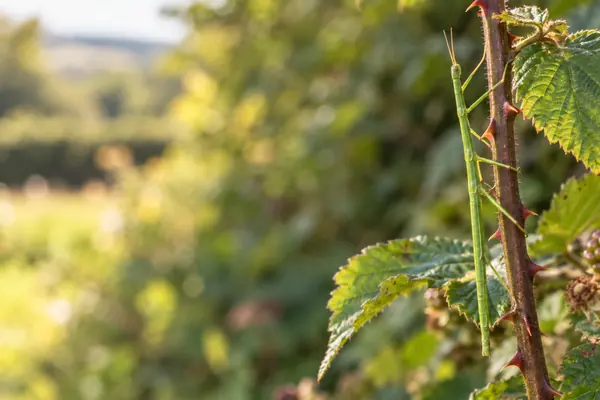
Stick insects arrived in south-west England on plants shipped from New Zealand more than a century ago. They have lived wild ever since, feeding on bramble and privet, and almost no one sees them because they look exactly like twigs.
Updated
THE SHORT ANSWER
None of Britain's wild stick insects is native.
They came with plants and stayed.
ARRIVALS
Buglife says three New Zealand species became naturalised after plants, including tree ferns, were shipped to nurseries in south-west England. The first was found in a Paignton garden in 1909.
Identify oneNO MALES
The UK's wild stick insects are all female. They reproduce by parthenogenesis, laying eggs that develop without a male. Prickly stick insect males have never been found, even in New Zealand.
Their yearHITCHHIKERS
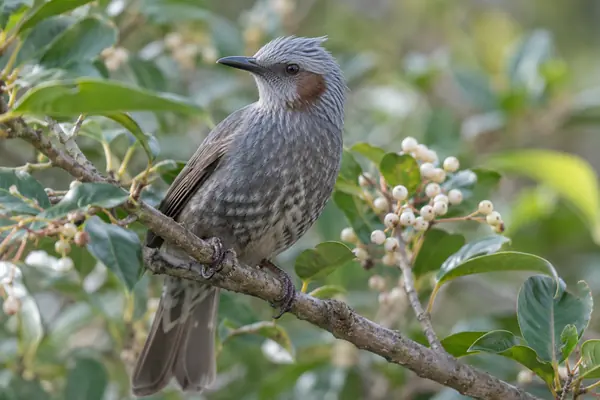
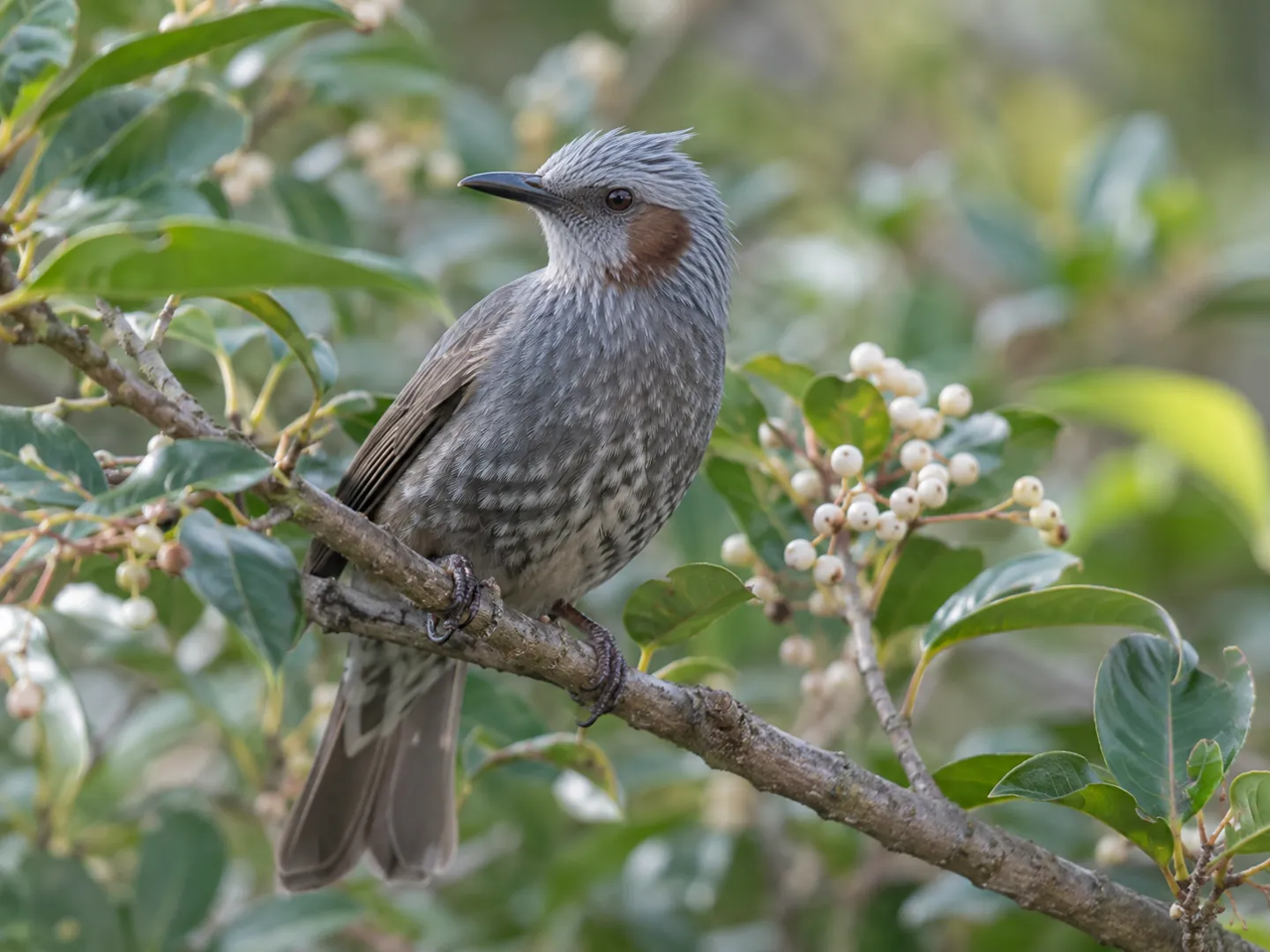
Japanese researchers fed stick insect eggs to a common bird predator and found 5 to 20% passed through unharmed. For one species, the eggs then hatched.
See the numbersA QUICK IDENTITY CHECK
Pick the description that fits to see which species it is likely to be and where it lives. The bar shows how widespread that species is in the wild in the UK.
Based on the Phasmid Study Group, Buglife and the Grasshoppers and Related Insects Recording Scheme. Please report sightings to a recording scheme.
TWO NUMBERS WORTH KNOWING
One figure on which stick insect you are likely to meet,
one on how stick insects may travel.
60%
Share of records that are the unarmed stick insect
The unarmed stick insect is the UK's most common species, with the strongest colonies around Truro, Falmouth and St Austell in Cornwall and Plymstock in Devon.
UK RECORDS · PHASMID STUDY GROUP
5–20%
Eggs excreted unharmed by birds
Researchers fed eggs of three stick insect species to brown-eared bulbuls. Between 5 and 20% came out unharmed, and eggs of one species went on to hatch.
BIRD TRAVEL · KOBE UNIVERSITY 2018
The Phasmid Study Group suggests that stick insect eggs in the soil of garden-centre plants may explain the unarmed stick insect's recent spread in Cornwall and Devon.
A STICK INSECT'S YEAR
The UK's naturalised species share the same simple annual cycle, according to the Phasmid Study Group and Buglife.
Eggs hatch into miniature adults about 12 mm long, which climb the first stem they find.
Growth is rapid and they are fully grown by mid-summer, surrounded by food such as bramble and privet.
A few weeks later they start laying, typically 3 or 4 eggs a day, simply dropped below the plant.
As leaves fall they wander, and on cold days bask on south-facing walls. Few adults survive into winter.
MASTERS OF DISGUISE
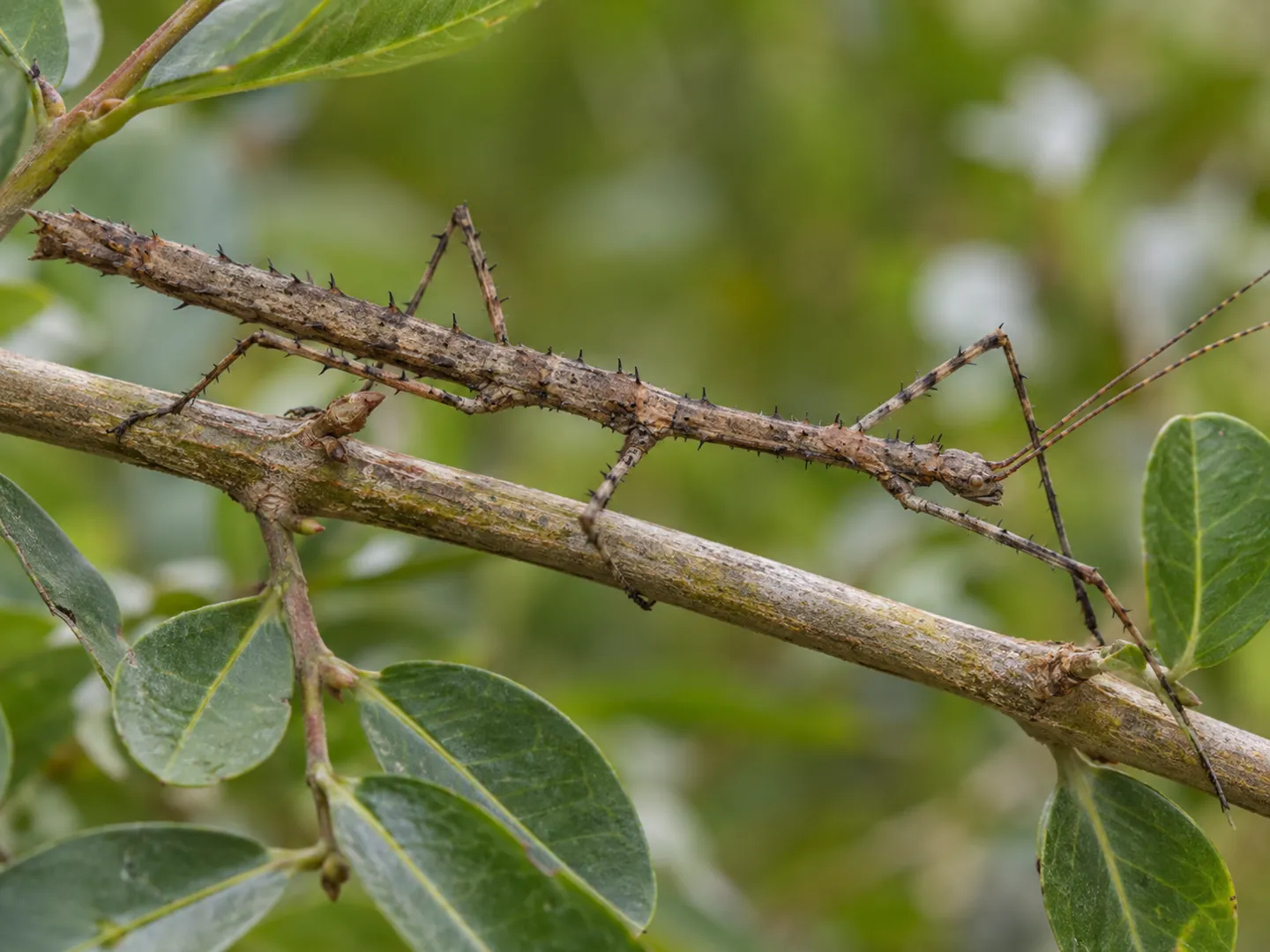
Buglife says the unarmed stick insect stays camouflaged by swaying with the breeze like the plant it sits on. With food all around and no need to find a mate, stick insects have little reason to move far.
Unlike some non-native species, the UK's stick insects appear to have self-sustaining populations and are thought to have no negative impact on native wildlife or plants, though Buglife notes more research is needed.
Questions
Yes. There are no native species, but three from New Zealand have lived wild in the UK for over 100 years, almost all in south-west England. One has also been recorded around the Bay of Kenmare in south-west Ireland.
Buglife explains they arrived when plants, including tree ferns, were shipped from New Zealand to nurseries in south-west England. The first UK record was in a Paignton garden in 1909.
The UK's wild stick insects are all female and reproduce by parthenogenesis: their eggs develop without fertilisation. Males of the prickly stick insect are unknown, even in New Zealand.
The Phasmid Study Group describes the unarmed stick insect as the UK's longest insect, with adult bodies up to 125 mm, although about 100 mm is more usual.
Buglife says the UK's stick insects are thought to have no negative impact on native wildlife or plants, although further research is needed.
ABOUT THIS NAME
doodlestick.com is part of the DoodleSale portfolio. It isn't in an auction right now, but you can ask about leasing it.